
A dog poop chart that's actually useful
Vets score stool on a 1–7 scale, and the number tells you more than the colour does. Here's how to score your dog's stool at home, what each grade means, and when a change is worth a phone call.
Maya Reinhardt
Veterinary nutrition consultant
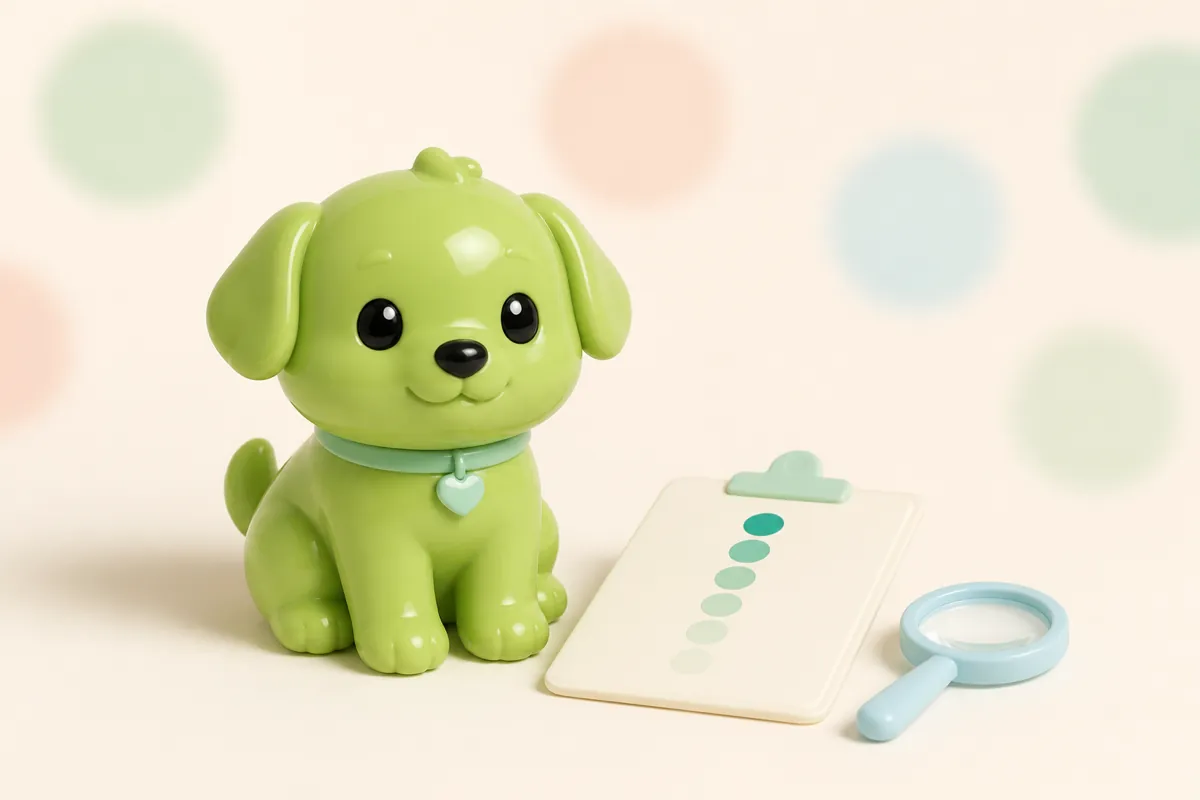
Every clinic uses some version of the same scale, and almost no pet owner has seen it. That's a shame, because stool is the highest-frequency health signal you have access to — it updates once or twice a day, for free, without a blood draw.
Here's the scale, what each grade actually means, and how to use it without turning your life into a spreadsheet.
The 1–7 fecal score
- 1 — Very hard, dry pellets. Requires effort to pass. Suggests dehydration, low fibre, or (in older dogs) reduced motility.
- 2 — Firm, segmented, doesn't leave residue. Slightly dry. Acceptable.
- 3 — Log-shaped, moist surface, holds form, leaves no mark. This is the target.
- 4 — Very moist, holds shape but leaves residue when picked up. Still within normal for many dogs.
- 5 — Very moist, piles rather than holds shape. The first grade that means something. Mild GI upset.
- 6 — Textured piles, no defined shape. Diarrhoea.
- 7 — Watery, no texture, flat puddle. Significant diarrhoea. Hydration becomes the priority.
A healthy adult dog lives at 2–3. A single 5 after a rich meal is nothing. Three days at 5 is a pattern. Any 7 in a puppy, a senior, or a small-breed dog is a same-day phone call, because fluid loss scales with body size and small dogs run out of margin fast.
Colour: mostly ignore it, except for four cases
Owners fixate on colour. Most variation is diet — orange kibble makes orange stool, a dog that ate grass produces green stool, bone-heavy raw diets produce pale chalky stool. None of that is interesting.
Four colours are interesting:
- Black and tar-like — digested blood from the upper GI tract. Urgent.
- Red streaks or fresh blood — lower GI bleeding. If the dog is otherwise well and it's a single streak on a firm stool, it's often colitis; if it's repeated or the dog is unwell, call.
- Grey, greasy, foul-smelling, and floating — poor fat digestion. Worth investigating properly, especially in German Shepherds and other breeds prone to pancreatic insufficiency.
- Consistently yellow or mustard with soft stool — often bile transit issues or an ongoing small-intestinal problem.
Also worth noting: mucus — a slimy jelly coating — points at the colon rather than the stomach. A little is common in a mild flare. A lot, repeatedly, is worth a visit.
Frequency matters more than most people think
An adult dog on a consistent diet is generally regular: one to three times a day, at roughly the same times. What matters is the delta.
A dog that has passed stool twice a day for two years and is now going five times a day at grade 5 has a problem, even though "five soft stools" would be normal for a puppy. The baseline is the diagnostic. Without one, every single observation is uninterpretable — which is the whole argument for logging.
Straining with nothing produced is a different signal entirely, and in a dog that is also vomiting or has a distended abdomen it can indicate an obstruction. That's an emergency, not a wait-and-see.
The 24-hour rule for mild upset
For an otherwise bright, well-hydrated adult dog with a grade 5–6 stool and no other signs:
- Don't fast for long. Extended fasting has fallen out of favour — the gut lining heals better when fed. Withhold the next meal if there's vomiting, otherwise feed small, frequent, bland portions.
- Bland means low fat, easily digestible. Plain boiled chicken and white rice works; so do the prescription GI diets, which are better balanced for anything longer than a couple of days.
- Water is the thing to watch. A dog losing fluid at grade 6–7 needs to be drinking. If they won't, that changes the urgency.
- Re-score every stool. Improvement should be visible within 24–48 hours.
If you're not back to grade 3–4 within 48 hours, or anything on the red-flag list appears, stop home-managing it.
Same-day vet if: the dog is lethargic or collapsed, vomiting repeatedly alongside diarrhoea, has black tarry stool, has a painful or distended abdomen, is a puppy under six months, is unvaccinated, or has diarrhoea plus a known toy/sock habit. Puppies with parvovirus deteriorate in hours, not days.
Making this a two-second habit
Nobody sustains a stool diary. What people do sustain is a photo — and the useful thing about a photo is that it carries the grade whether you assign one or not.
That's the design behind the PawSolids stool scanner: photograph the result on a walk, and the app returns a consistency grade, colour flags, and hydration signs, then files it against the day's meals. Two seconds, no judgement call required from you, and the scale stays consistent even when you're half-awake and it's raining.
Where it pays off is the correlation. Soft stool the day after every raw chew, or every time the sitter feeds, or every second Sunday when the kids share their sandwich — those are patterns nobody notices in real time and everybody notices in a chart. If food turns out to be the trigger, the elimination diet protocol is the next step, and a stool history makes it far easier to run.
The one-line summary
Score 1–7, aim for 3, treat a three-day drift as real, ignore colour unless it's black, red, grey, or persistently yellow, and know your dog's normal frequency well enough to notice when it changes. That's the entire skill.
PawSolids is a health journal and pattern detector, not a diagnostic tool. Anything acute, painful, or bloody belongs with your veterinarian today, not in a log.
Weiterlesen
Your dog won't eat but is drinking water. How long can you wait?
A skipped meal is normal. Two skipped days is not. Here's the timeline vets use, the difference between 'won't eat' and 'can't eat', and what to check before you call.
Your dog is itching and there are no fleas. Now what?
Itching without fleas has four common causes, and they look almost identical from the outside. Here's how to tell them apart at home — and the two weeks of notes that will get you a real answer.