
Why your cat probably isn't drinking enough water (and what to do)
Cats evolved from desert animals — and it shows. Here's how to know if your cat is hydrated, and the three changes that actually move the needle.
Maya Reinhardt
Veterinary nutrition consultant
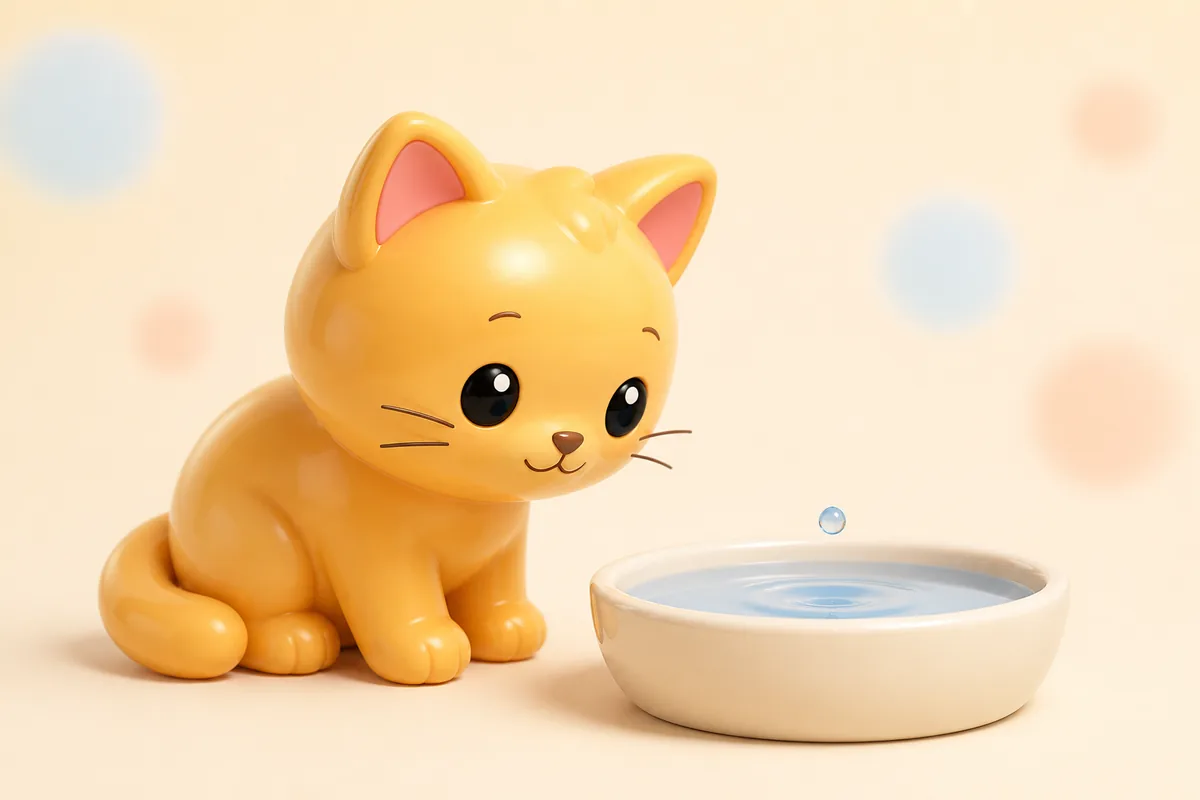
Cats are bad at being thirsty. Specifically, they evolved to get most of their water from prey — and their thirst response is about a third as sensitive as a dog's. The result: most indoor cats walk around in a state of mild chronic dehydration that nobody notices until something goes wrong.
The 50 ml/kg/day rule
A healthy adult cat needs roughly 50 ml of water per kilogram of body weight per day — including water from food. So a 4 kg cat needs about 200 ml/day total.
- If they're on wet food: roughly 70% is already in the food. They need ~60 ml/day on top.
- If they're on dry kibble: ~90% of their water needs come from drinking. They need ~180 ml/day on top.
This is why cats on dry-only diets are at significantly higher risk of urinary issues. Their thirst response can't keep up with the gap.
The three changes that actually work
In the cat hydration research, only three things consistently move the needle:
- Switch to a fountain. Cats prefer flowing water. A simple fountain increases voluntary intake by 30–50% in most cats.
- Multiple bowls, multiple rooms. Cats won't walk far for water when they're not actively thirsty. Bowls near sleeping spots get used more.
- Add water to wet food. A tablespoon of water mixed into wet food increases total daily intake and isn't usually rejected.
Things that don't work nearly as well as you'd think: ice cubes, fancy bowls, flavored water additives. The science just isn't there.
How to know if it's working
You don't need a lab. You need:
- Daily intake tracking — even rough estimates. PawSolids' water logging takes 2 seconds per top-up.
- Litter box volume. A well-hydrated cat produces 2–3 normal urine clumps per day. Fewer or smaller clumps over a few days is the earliest sign of trouble.
- Skin tent test. Pinch the skin between the shoulder blades. It should snap back instantly. Slow return = dehydration.
If you log water consistently for two weeks, you'll know whether your cat is in the safe zone — and you'll have real data the next time your vet asks.
Have a senior cat? The 50 ml/kg/day baseline goes up by ~15% after age 11. Worth tracking even more carefully.
Weiterlesen
Bald patches on your cat: over-grooming, and what's driving it
Cats groom in private, so the first thing most owners see is the hair loss. Here's how to tell over-grooming from hair that's falling out, why 'stress' is usually the last answer rather than the first, and what to track.
Your senior cat is losing weight. It's not just age.
Weight loss in an older cat is a symptom, not a stage of life — and the four conditions behind most cases are all detectable early. Here's how to catch a 5% loss before it becomes 20%.