
Your dog won't eat but is drinking water. How long can you wait?
A skipped meal is normal. Two skipped days is not. Here's the timeline vets use, the difference between 'won't eat' and 'can't eat', and what to check before you call.
Maya Reinhardt
Veterinary nutrition consultant
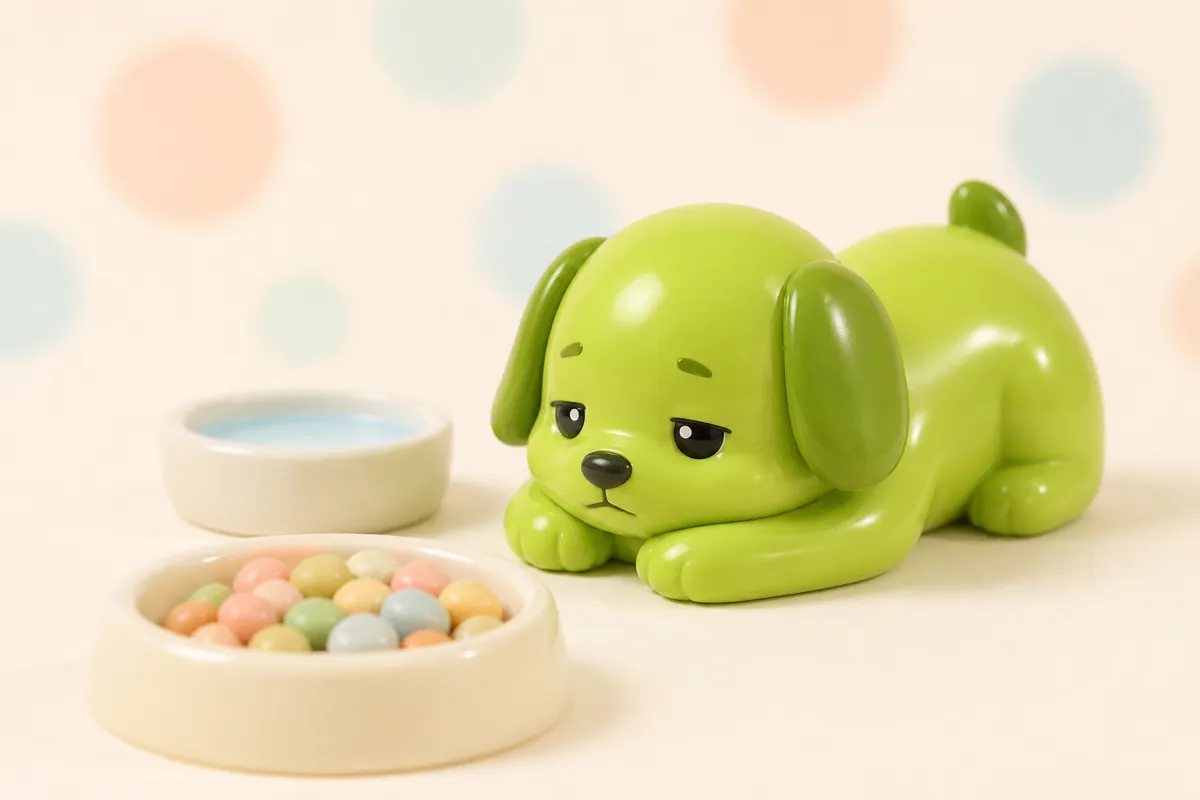
Appetite is the first thing to go and the last thing to come back. That makes it a sensitive early-warning signal — and a noisy one, because dogs also skip meals for reasons as trivial as a warm afternoon or a bag from a new batch.
The question isn't whether a missed meal matters. It's how long you're allowed to watch.
The timeline
For an otherwise normal dog that is drinking, bright, and behaving normally:
- Healthy adult dog: watch for 24 hours. Beyond that, call.
- Puppy under 6 months: 12 hours. Puppies have almost no glycogen reserve and can become hypoglycaemic quickly. Toy breeds, faster still.
- Senior dog, or any dog with a known condition (diabetes, kidney disease, heart disease, cancer): 12 hours, and sooner if they're on medication that must be given with food.
- Diabetic dog on insulin: call immediately. Insulin dosing without food intake is dangerous, and the timing question needs your vet, not the internet.
- Cat, if you're reading this for a cat: cats are a different rule entirely. More than 24 hours without eating puts a cat at risk of hepatic lipidosis. Don't apply dog timelines to cats.
Drinking normally is genuinely reassuring — it makes dehydration and several nastier causes less likely. It does not extend the clock indefinitely. And drinking a lot more than usual while refusing food is its own signal, pointing toward kidney disease, diabetes, or in unspayed females, a pyometra. That combination deserves a call today regardless of the hours elapsed.
First distinguish "won't" from "can't"
They look the same across the room and mean completely different things.
Watch the dog approach the bowl. A dog that ignores food entirely is nauseated, in pain elsewhere, or systemically unwell. A dog that goes to the bowl, shows clear interest, then drops the food, chews on one side, or walks away and comes back has a mechanical problem — dental disease, a fractured tooth, something lodged in the mouth or throat, a painful jaw.
Second test: offer something unreasonably tempting. A spoon of the wet food they get once a year, a piece of chicken. A dog that refuses that is a different level of concern than a dog that turns down kibble but demolishes chicken. The first is anorexia; the second is often preference, boredom, or a mildly unwell dog that will be fine tomorrow.
The six causes that cover most cases
- Gastrointestinal upset. Dietary indiscretion, a virus, a change of food. Usually comes with soft stool or vomiting, and usually resolves in a day or two.
- Dental pain. Enormously under-diagnosed. A fractured carnassial or advanced periodontal disease makes eating hurt, and dogs hide it well — most keep eating right up to the point they don't.
- Pain anywhere. Back pain, arthritis flare, a torn nail. Appetite drops with pain in dogs far more reliably than with mild illness.
- Systemic illness. Kidney disease, liver disease, infection, endocrine disease. Typically accompanied by increased thirst, weight loss, or lethargy over weeks.
- Medication. NSAIDs, antibiotics, and chemotherapy agents all commonly cause nausea. If a new drug started in the last week, that's your first hypothesis.
- Behavioural and environmental. A house move, a new pet, a change in feeding schedule, heat. Real, common, and diagnosed only after the others are excluded.
What to check before you call
Five minutes, no equipment:
- Gums. Should be pink and moist. Pale, white, blue, yellow, or brick red — go now, don't finish reading.
- Hydration. Pinch the skin over the shoulders; it should snap back instantly. Tacky or dry gums plus slow skin return means dehydration despite drinking.
- Mouth. If your dog tolerates it, lift the lip. Look for a broken tooth, a swollen face under the eye, ulceration, or a string caught under the tongue. Never pull on a string you find.
- Abdomen. Gently press. Flinching, tensing, or a hard distended belly is urgent — particularly in a deep-chested breed, where bloat is a genuine emergency measured in hours.
- Everything else. Vomiting, diarrhoea, coughing, lameness, straining to urinate, drinking volume, energy level.
Write down what you find with a timestamp. Twelve hours later you will not remember whether the gums looked "a bit pale" or normal, and that comparison is exactly what the vet will ask for.
Go today, not tomorrow, if: the gums are pale or yellow, the abdomen is hard or painful, there's unproductive retching, the dog is a puppy or diabetic, there's been no food for 24 hours in a dog with any chronic condition, or the dog is drinking dramatically more than usual while refusing food.
Getting them eating again
Once serious causes are off the table, the practical steps:
- Warm the food. Body temperature releases aroma; appetite in dogs is mostly smell. This alone works surprisingly often.
- Add moisture. Warm water or low-sodium broth over kibble. Softer food is also easier on a sore mouth.
- Smaller, more frequent portions. A full bowl is off-putting to a nauseated dog. Quarter portions, four times a day.
- Feed somewhere quiet. Away from the other dog, away from foot traffic.
- Don't build a picky eater. Topping the bowl with something better every time a dog refuses teaches a fast, durable lesson. Offer for 20 minutes, remove, offer again at the next meal.
Log every attempt and what was actually consumed — not what was offered. Appetite recovery is gradual and the trend over three days is the thing you want to see. PawSolids' meal logging and reminders exist for exactly this stretch: a dog eating 30%, then 50%, then 80% of normal is recovering, and that curve is visible in a chart long before it's obvious at the bowl. If it flattens instead, you'll know that too — and you'll have three days of intake data to bring in rather than an impression.
PawSolids is a health journal, not a diagnostic tool. Appetite loss can be the first sign of something serious. When the timeline above says call, call.
Keep reading
A dog poop chart that's actually useful
Vets score stool on a 1–7 scale, and the number tells you more than the colour does. Here's how to score your dog's stool at home, what each grade means, and when a change is worth a phone call.
Your dog is itching and there are no fleas. Now what?
Itching without fleas has four common causes, and they look almost identical from the outside. Here's how to tell them apart at home — and the two weeks of notes that will get you a real answer.